Why Would I Deceive You CapCut Template: How to Make the Deadpan Denial Reel Everyone Is Posting in November 2026
I have watched that clip about forty times now, and I still laugh every single time. A woman looks straight into the camera, completely calm, and says, “Why would I deceive you?” — and then the on-screen text tells you exactly what she just did. My cat did it to me last week. Well, not the talking part. He knocked a plant off the shelf, sat next to the mess like a tiny innocent statue, and stared at me with those big round eyes. If cats could make Reels, his would be this trend.
That is the whole joke, and that is why it works. The “Why Would I Deceive You” CapCut template takes a deadpan denial and pairs it with a confession written in plain text. The speaker sounds perfectly honest. The text says otherwise. Your brain enjoys the gap between the two, and before you know it, you have watched it twice and sent it to three people.
If you have been scrolling TikTok or Reels this week, you have seen it. A golfer who swears he is not addicted after one good range session. A manager promising there are no layoffs the week before a reorg. A dog insisting it had nothing to do with the torn cushion. The format is everywhere in November 2026, and the good news is that it is one of the easiest trends to make. You need one photo or clip, the template, and about ten minutes.
I made my first one in a rush and it flopped, so let me save you the same mistake. Here is everything I learned, step by step.
What the “Why Would I Deceive You” Trend Actually Is
The trend is built around a short audio clip of a woman calmly saying, “Why would I deceive you?” Her voice is steady, almost sweet. Nothing about it sounds guilty. That is the point.
Most creators use it one of two ways. The popular version uses a CapCut template that drops a cut-out of the speaker over a background photo. The speaker floats in a corner while your photo fills the screen, and your confession appears as text. The other version is simpler: you film yourself lip-syncing the line with a straight face and a slightly too-innocent smile, then add your own text over the top.
Both versions follow the same structure. The audio plays. The text reveals the thing you are “definitely not” doing. The audience laughs because they have done the exact same thing.
The trend showed up on the November 2026 trend lists as one of the formats to watch this month, right as the Halloween-to-holidays handoff was filling feeds with seasonal jokes. It works for almost any niche because the joke is universal. Everyone has denied something obvious at least once.
Why This Trend Is So Easy to Get Right
Most viral formats ask a lot from you. You need a costume, a location, a transition you have to practise six times, or an effect that only works in perfect light. This one asks for almost nothing.
You do not need to dance. You do not need to act. You do not need a fancy camera. The template does the visual work, the audio does the comedy timing, and your text does the rest. If you can type a sentence and pick a photo, you can make this Reel.
That is also why it is so forgiving. My first attempt was genuinely bad — wrong photo, text too small, timing off — and it still got more saves than a transition Reel I spent two hours on. People share this format because the joke lands, not because the edit is perfect.
What You Need Before You Start
Keep it simple. You need:
- CapCut (free version is fine) on your phone
- The “Why Would I Deceive You” audio or template, found through TikTok or inside CapCut’s template search
- One background photo or short clip that shows the scene of your “crime”
- Your confession text, one or two short lines
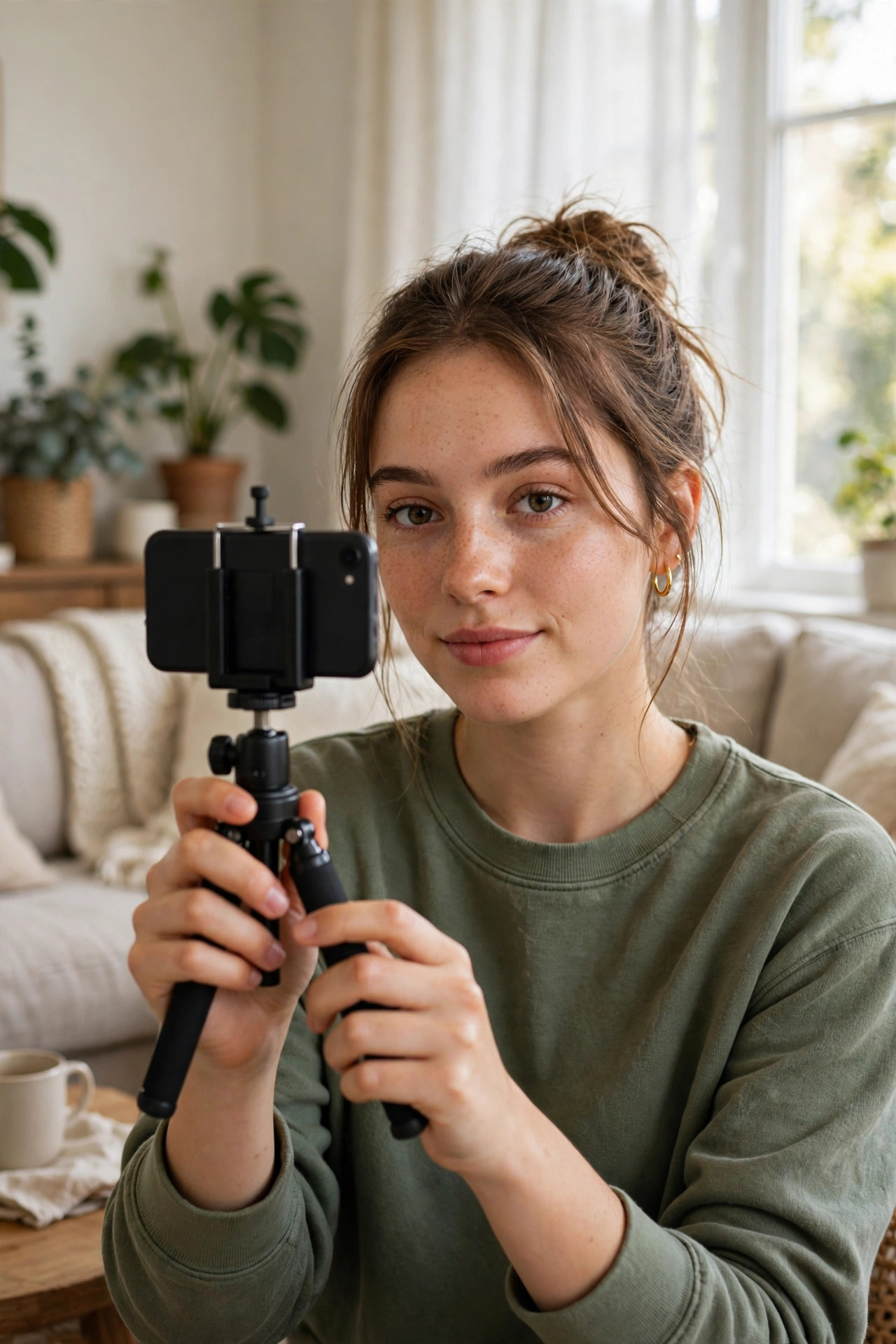
That is it. No ring light, no tripod, no extra apps. I filmed my second version sitting on my sofa with the phone propped against a cushion, and it looked fine.
One thing worth checking first: the audio availability. Some business accounts cannot use every trending sound, so if you run a business page, search for the audio inside Instagram or TikTok first and confirm it is available to you before you build the whole video around it.
How to Find the “Why Would I Deceive You” CapCut Template
There are two reliable ways to find it, and I have used both.
From TikTok: Open TikTok and search “Why would I deceive you CapCut template”. Tap a video that uses it, then tap the “CapCut – Try this template” button above the caption. That opens CapCut with the template loaded and ready.
From inside CapCut: Open CapCut, tap Templates at the bottom, and search “Why would I deceive you”. Pick the version with the most uses — that is usually the cleanest cut-out layout. Tap “Use template”.
If the exact template does not show up in your region, do not panic. Search “deceive you” or just the audio name. Template availability changes by country and app version, and a near-identical version usually exists under a slightly different name. The lip-sync version needs no template at all, so that is always your fallback.
Step-by-Step: Making Your Reel With the Template
Here is the exact process I follow now, after fixing every mistake from my first try.
Step 1: Pick your confession first
Do not start with the photo. Start with the sentence. The joke lives in the text, so write it before you touch anything else.
Good confessions are specific and a little embarrassing. “Me, after telling my boss I am definitely not job hunting” works. “Me, saying I only had one cookie” works even better if the photo shows the empty box. Vague lines like “Me lying again” fall flat because there is nothing to picture.
My rule now: if the sentence makes me smile when I read it out loud, it is good enough. If I have to explain it, it is not.
Write two or three options and pick the strongest one. Keep it under about twelve words so it fits on screen without shrinking to nothing.
Step 2: Choose a background photo that tells the story
The background photo is the evidence. It should show the scene your text is denying.
If your text is about the gym, use a photo of your trainers still in the box. If it is about your pet, use the photo of the mess. If it is about online shopping, use a screenshot of the delivery tracker. The funnier the gap between the calm denial and the guilty photo, the better the Reel performs.
Use a bright, clear photo. Dark or blurry backgrounds make the cut-out speaker hard to see, and people scroll past in half a second. I learned this the hard way: my first version used a dim evening photo and the whole thing looked muddy.
Portrait photos work best. The template is built for 9:16 vertical video, so a portrait shot fills the frame without awkward cropping.
Step 3: Load the template and add your photo
Open the template in CapCut and tap “Use template”. Tap the photo slot and pick your background image. The template places the speaker cut-out over it automatically — usually in a bottom corner.
Check the placement. If the cut-out covers the important part of your photo, tap it and drag it to the other side. Most versions let you move it freely. Keep the speaker visible but small enough that your photo still tells the story.
Step 4: Add your confession as on-screen text
Tap Text, then Add text, and type your confession. This is where most people rush, so slow down.
Pick a bold, readable font. Keep the text big — it should be readable on a small phone screen without squinting. White text with a black outline is the safest choice because it stays readable over any photo.
Split long lines into two short lines instead of one long line across the screen. Two lines, centred, read much faster than one stretched line.
Time the text to appear just as the audio line lands. If the text shows up too early, the joke spoils itself. If it shows up too late, people have already scrolled. In CapCut, drag the text layer so it starts a beat after the audio begins.
Step 5: Check the timing, then export
Watch the whole thing twice. The first time, watch it like a stranger. Does the joke make sense in three seconds? Is the text readable? Does anything cover the speaker’s face?
The second time, watch it with the sound on. The audio is short, so the timing matters more than usual. If the text and the voice do not land together, nudge the text layer a fraction earlier or later until they click.
Then export at 1080p. In CapCut, tap Export, pick 1080p and 30fps, and save it to your phone. Do not export at a lower resolution to save space — blurry text is the fastest way to kill a text-based Reel.
The Lip-Sync Version (No Template Needed)
If you would rather film yourself, this version is just as popular and arguably funnier, because your own face sells the lie.
Prop your phone up at eye level. Film yourself in good daylight, facing a window if you can. Play the audio once to learn the timing, then record yourself mouthing the line with a completely straight face. The straighter your face, the funnier it is. A tiny, slightly too-innocent smile at the end is the only expression you need.
Add your confession text over the clip in CapCut the same way as the template version. Keep the text on screen for the full clip so people who watch without sound still get the joke.
I prefer this version for personal confessions, because your own face makes it feel like a real confession rather than a meme. The template version is faster, though, and better when your photo is the star of the joke.
Mistakes I Made (So You Can Skip Them)
Mistake 1: Using a photo that had nothing to do with the text. My first Reel paired the denial audio with a random selfie. Nobody understood the joke because there was no evidence. The photo has to be the proof.
Mistake 2: Text too small. I tried to fit a whole paragraph on screen. It shrank to ant size and nobody read it. One short sentence, big and bold, beats a clever paragraph nobody can read.
Mistake 3: Covering the speaker with text. In the template version, I placed my text right over the speaker’s face. Move the text to the top half of the screen and leave the speaker clear.
Mistake 4: Posting without checking the audio. I once exported a version where the audio had not attached properly, and the Reel went out silent. A silent version of an audio trend is just a confusing photo. Always watch with sound before posting.
Mistake 5: Explaining the joke in the caption. The caption should add to the joke, not explain it. A short line like “I said what I said” works. A paragraph explaining why it is funny does not.
Caption and Hashtag Ideas That Actually Fit
Keep the caption short. The video is the joke; the caption is the nudge to comment.
Try one of these styles:
- A second confession: “Okay fine, it was me. All four cookies.”
- A question: “Be honest, who else does this?”
- A deadpan line: “I have no idea what you are talking about.”
For hashtags, use a small set that matches the format: #whywwouldideceiveyou, #capcuttemplate, #reelstrend, #funnyreels, plus one or two for your niche. Do not stuff twenty hashtags into the caption — it looks desperate and it does not help the way it used to.
Post when your audience is actually awake. I posted my first one at 2 a.m. because I was excited, and it sat there doing nothing for hours. Evening scroll time, when people are on the sofa with their phones, has worked far better for me.
Who This Trend Works Best For
Honestly, almost everyone. I have seen it work for pet accounts, gym creators, small business owners, students, parents, and food bloggers. The format is a blank canvas: the audio stays the same, and your text makes it yours.
It works especially well if you have a niche with built-in guilty pleasures. Fitness creators deny the skipped workout. Food creators deny the midnight snack. Shop owners deny checking their own sales numbers every ten minutes. The more specific the confession, the more your own audience recognises themselves in it.
It also works as a series. Once you find a confession your audience loves, make a second one the next day with a different text. People start waiting for the next denial, and that is exactly the kind of repeat viewing that helps a Reel travel.
Frequently Asked Questions
What is the “Why Would I Deceive You” CapCut template?
It is a CapCut template built around a deadpan audio clip of a woman saying, “Why would I deceive you?” The template places a cut-out of the speaker over your own background photo, and you add on-screen text confessing the thing you are denying.
Where do I find the “Why Would I Deceive You” template?
Search for it on TikTok and tap the “CapCut – Try this template” button on a video that uses it, or open CapCut, tap Templates, and search “Why would I deceive you”. If it is not available in your region, film the lip-sync version instead — it needs no template at all.
Do I need CapCut Pro to use this template?
No. The free version of CapCut handles this template fine, including the text, timing, and 1080p export. Some effects inside CapCut are Pro-only, but this trend does not need any of them.
Why is my “Why Would I Deceive You” Reel not getting views?
Check three things first: is the audio actually attached and audible, is your text big enough to read on a small screen, and does your photo show the “evidence” behind the joke? A silent export, tiny text, or a random photo are the three most common reasons this format underperforms.
Can business accounts use the “Why Would I Deceive You” audio?
It depends on the account. Some business accounts cannot use every trending sound, so search for the audio inside Instagram or TikTok first and confirm it is available to you before you build the video around it. If it is blocked, use a similar royalty-free sound or the lip-sync version with your own voiceover.
How long should the Reel be?
Keep it short — the audio clip is only a few seconds long, so the whole Reel usually runs under ten seconds. Short and rewatchable beats long and explained. If your version runs past fifteen seconds, trim it.
Final Thoughts
I did not expect a five-second denial to become one of my favourite formats to make, but here we are. It is fast, it is funny, and it works with whatever photo is already sitting in your camera roll. My cat still has not admitted anything about the plant, by the way. He just sits there, calm as ever, like a man with nothing to hide.
Pick your confession, find a photo that gives you away, and make the Reel tonight. Then make a second one tomorrow with a different confession. That is how a one-off joke turns into a format your audience starts recognising — and recognising you for.
Related reads
- Lion Friend CapCut Template: How to Make the One-Photo AI Hug Video Everyone Is Posting — https://viralvideo.website/lion-friend-capcut-template/
- Zoom In Tiny Reveal Post: How to Film the Tiny-Detail Reveal Everyone Is Posting in October 2026 — https://viralvideo.website/zoom-in-tiny-reveal-post-reel/
- Some People Call Me Reel: How to Make the Nickname-to-Pitch Reel Everyone Is Posting in November 2026 — https://viralvideo.website/some-people-call-me-reel/
- CapCut Slow Motion Template: How to Make Smooth Slow-Mo Reels Everyone Is Saving in November 2026 — https://viralvideo.website/capcut-slow-motion-template-reel/
- 7 CLIPS CapCut Template: How to Make the Seven-Clip Beat-Sync Reel Everyone Is Posting in November 2026 — https://viralvideo.website/7-clips-capcut-template/
- I Do My Best Trend: How to Make the Relatable Effort Reel Everyone Is Posting in November 2026 — https://viralvideo.website/i-do-my-best-trend-reel/